

Introduction
If you have ever wanted to master a homemade pizza dough recipe without feeling like you need a culinary degree, this is the one to start with. This dough is built for real kitchens, real schedules, and real beginner bakers who want a crust that tastes far better than anything from a tube or freezer bag. It bakes up with a lightly crisp bottom, a chewy center, and edges that puff beautifully in the oven. The ingredient list stays refreshingly simple, yet the final result tastes like something you would proudly slide onto the table for family pizza night.
What I love most about this easy pizza dough recipe is how dependable it is from the very first batch. The dough comes together with pantry staples, rises into a soft and workable ball, and stretches without fighting you if you give it the short rests it needs. That makes it perfect for anyone learning how to make pizza dough at home for the first time.

A great pizza starts long before the toppings ever hit the crust, and that is exactly why this homemade pizza dough recipe deserves a permanent spot in your baking rotation. The dough is soft enough for beginners to handle, yet strong enough to support classic toppings like mozzarella, pepperoni, mushrooms, sausage, and fresh basil without turning limp in the center. You do not need specialty flour, a brick oven, or years of bread-making experience to get excellent results. You simply need warm water, yeast, flour, olive oil, salt, and a little patience while the dough rises.
This homemade pizza crust is especially good for families, weekend cooks, and anyone who wants a reliable base recipe they can customize again and again. Roll it thinner for a more delicate slice, or keep it a little thicker if you love a softer, chewier bite around the edge. Because the dough itself has real flavor, you are not relying on sauce and cheese to do all the work. That is one of the biggest differences between fresh homemade dough and many store-bought options, which often bake up flat, bland, or oddly tough. With this pizza dough recipe, the crust becomes part of the experience instead of just the thing holding the toppings.
Why This Recipe Works
- This homemade pizza dough recipe uses a straightforward ratio of flour, water, yeast, salt, and olive oil, so beginners can learn the process without getting overwhelmed.
- The dough contains enough water to stay soft and easy to stretch, but not so much that it turns sticky and frustrating to handle.
- A short rise develops flavor and texture, while an overnight chill option gives you even more flexibility for busy schedules.
- Olive oil adds tenderness and a subtle richness, which helps create that classic balance between crisp edges and a chewy interior.
- The recipe makes enough dough for 2 pizzas, so you can bake one now and save one for later or offer two topping options at the same meal.
- This easy homemade pizza dough works beautifully on a pizza pan, sheet pan, or preheated stone, which means you can use what you already own.
What Makes This Recipe Special
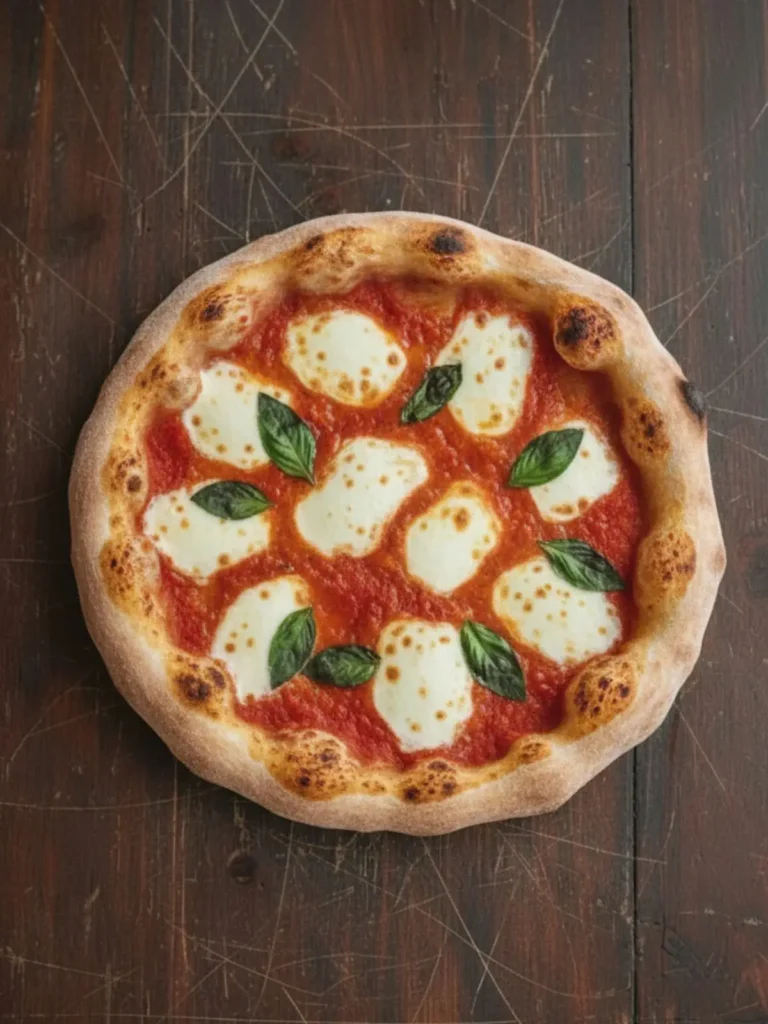
The reason this homemade pizza dough recipe stands out is not that it tries to be complicated or trendy. It wins because it respects the basics of good bread making while staying approachable for the everyday home baker. A lean dough like this does not depend on butter, milk, or eggs to create pleasure; instead, it builds flavor through fermentation, proper kneading, and a hot bake. That gives the finished crust a cleaner, more classic pizza flavor that tastes wonderful under both simple toppings and fully loaded combinations. It also means the dough is versatile enough to become not just pizza, but breadsticks, knots, stuffed crust, and rolls when you want to stretch one recipe into several meals.
Another reason this best pizza dough recipe feels special is how teachable it is. As you work through it, you start noticing the important visual cues that make baking more intuitive, such as how the dough changes from shaggy to smooth, or how a properly risen ball feels puffy and lively under your hand. Those are the kinds of small kitchen lessons that build confidence fast. Once you have made this pizza dough recipe for beginners, recipes for focaccia, sandwich bread, and dinner rolls suddenly feel much less intimidating. It is the kind of foundational bake that makes you a better baker without ever making you feel pressured.
Taste & Texture Results
- The crust bakes with a lightly crisp underside that gives every slice enough structure to hold sauce and cheese.
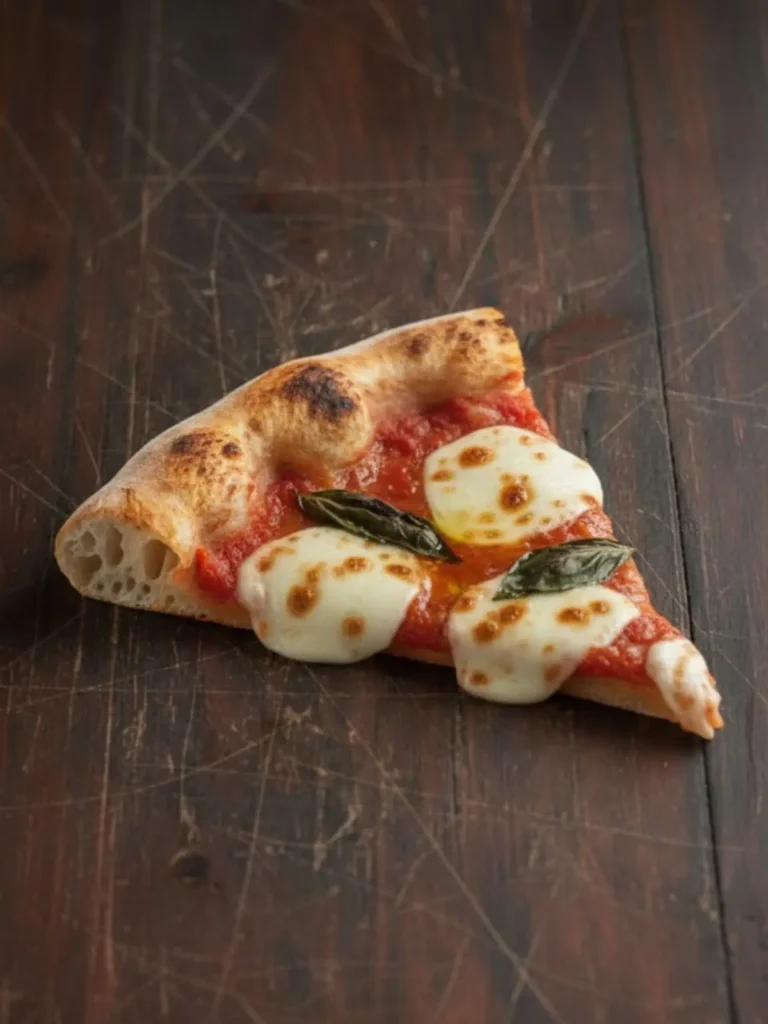
- Inside, the crumb stays soft and pleasantly chewy, which is exactly what most people hope for in a chewy pizza crust.
- The edges puff with gentle air pockets and turn golden brown rather than dry or cracker-like.
- Olive oil adds subtle flavor without making the dough heavy, greasy, or cake-like.
- When stretched a little thinner, this pizza crust recipe creates a crisp-chewy balance that feels very close to classic neighborhood pizza.
- When left slightly thicker, the same homemade pizza dough recipe produces a softer, more pillowy slice that still browns beautifully.
Ingredients
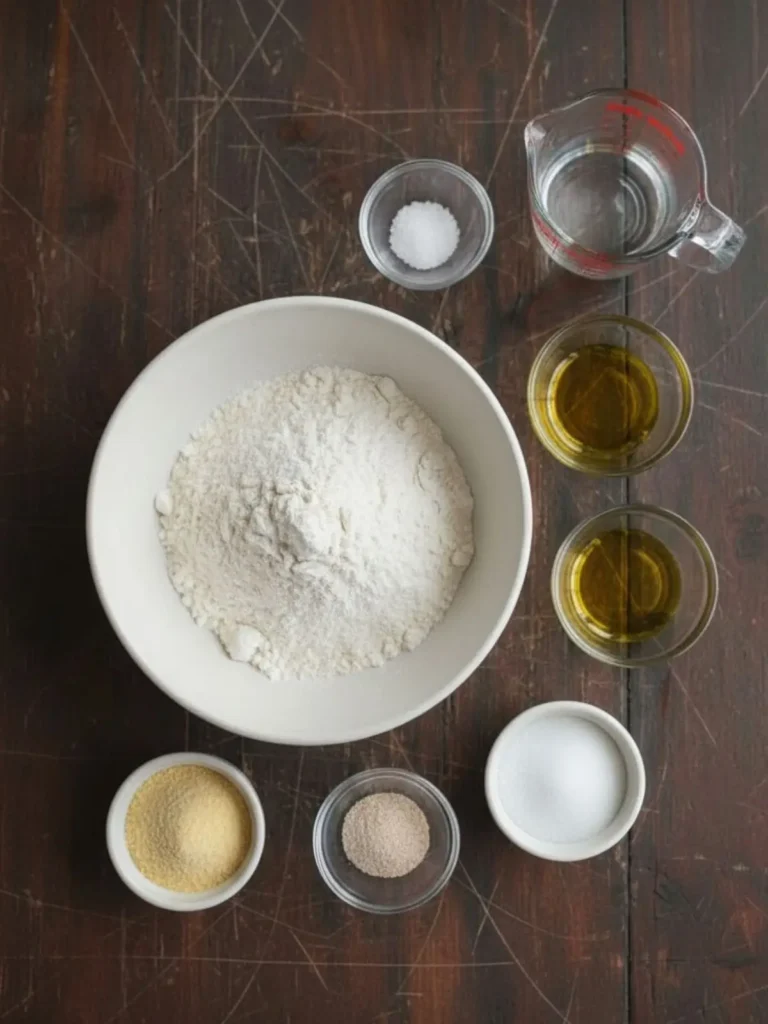
- 2 1/4 teaspoons instant yeast
- 1 1/3 cups warm water
- 3 1/2 cups unbleached all-purpose flour, plus more for the counter
- 2 tablespoons olive oil, plus more for the bowl and brushing
- 1 teaspoon fine salt
- 1 tablespoon granulated sugar
- 2 tablespoons cornmeal for dusting the pan
- 1 teaspoon garlic powder, optional
- 1 teaspoon Italian seasoning, optional
If you need to convert ingredient measurements, adjust baking temperatures, or switch between US and metric units, use our complete baking measurement conversion calculator.
Optional Add-Ins & Substitutions
- Add 1 teaspoon garlic powder to the flour for a savory dough that smells incredible as it bakes.
- Add 1 teaspoon Italian seasoning if you want the crust itself to bring a little extra herbal flavor to the pizza.
- Swap in bread flour for part or all of the all-purpose flour if you prefer a slightly chewier bite.
- Replace the sugar with 1 tablespoon honey if that is what you keep on hand, though the flavor will be a touch softer and rounder.
- Skip the cornmeal if needed and dust the pan lightly with flour, though cornmeal gives the bottom a classic pizzeria texture.
- Brush the shaped dough with a little olive oil before topping to protect the crust from a watery sauce and help it brown.
Baking Science Behind This Recipe
Understanding the science behind this homemade pizza dough recipe makes the process feel much easier, especially for beginners. Yeast wakes up in warm water, feeds on the sugar, and begins producing gas that inflates the dough as it rests. At the same time, the flour hydrates and starts forming gluten, the stretchy network that allows the dough to trap those gases and rise properly. Kneading strengthens that gluten, which is why the dough becomes smoother and more elastic after a few minutes of work. Salt matters too, because it deepens flavor and helps organize the gluten structure so the dough does not feel slack and weak.
The oven finishes what the mixing bowl started, and that is where the magic of this pizza dough recipe really shows itself. A hot oven causes the dough to spring during the first few minutes of baking, which creates lift around the edges and a light interior crumb. The moisture in the dough steams, the gluten sets, and the underside browns where it meets the hot pan or stone. Olive oil helps tenderize the crust just enough, keeping the center chewable rather than tough. Cornmeal adds a little insulation and texture on the bottom, which many people associate with their favorite takeout slices.
Step-by-Step Instructions
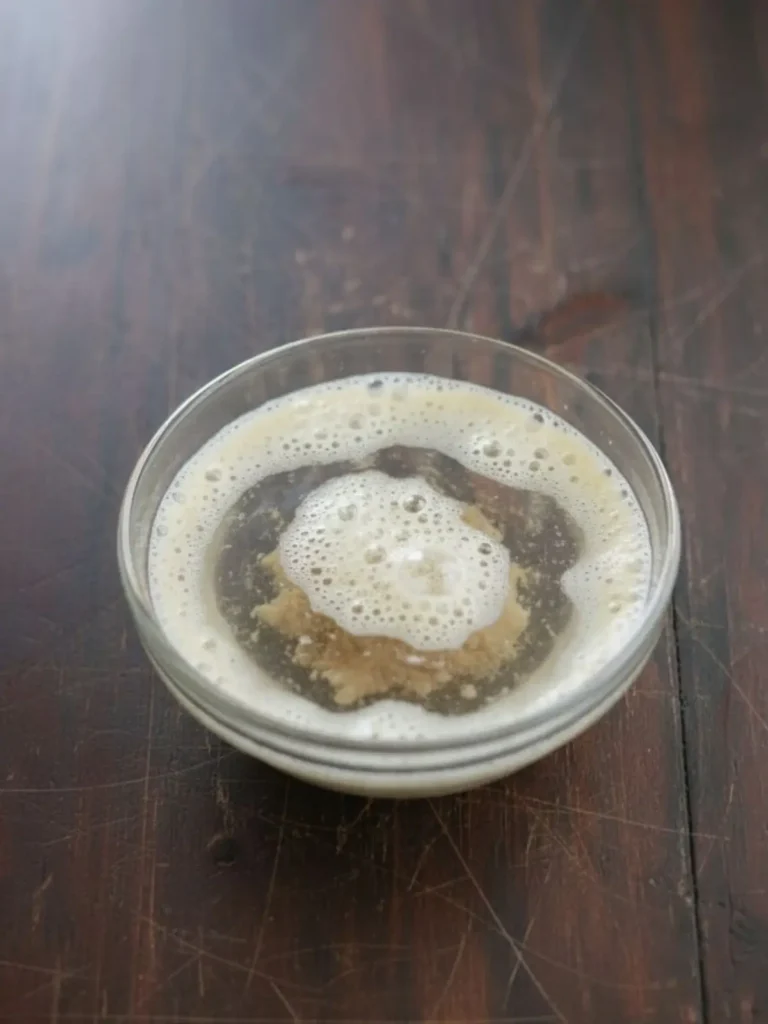
In a large mixing bowl, stir the warm water, sugar, and yeast together, then let the mixture sit until it looks creamy and foamy on top. This first step gives the yeast time to wake up, which is especially helpful for beginners who want visual confirmation that the dough is off to a good start. If you are using instant yeast, the foam may be a little subtler than with active dry yeast, but the mixture should still look lively after a few minutes. The water should feel warm, not hot, because excessive heat can damage the yeast before the dough ever has a chance to rise.
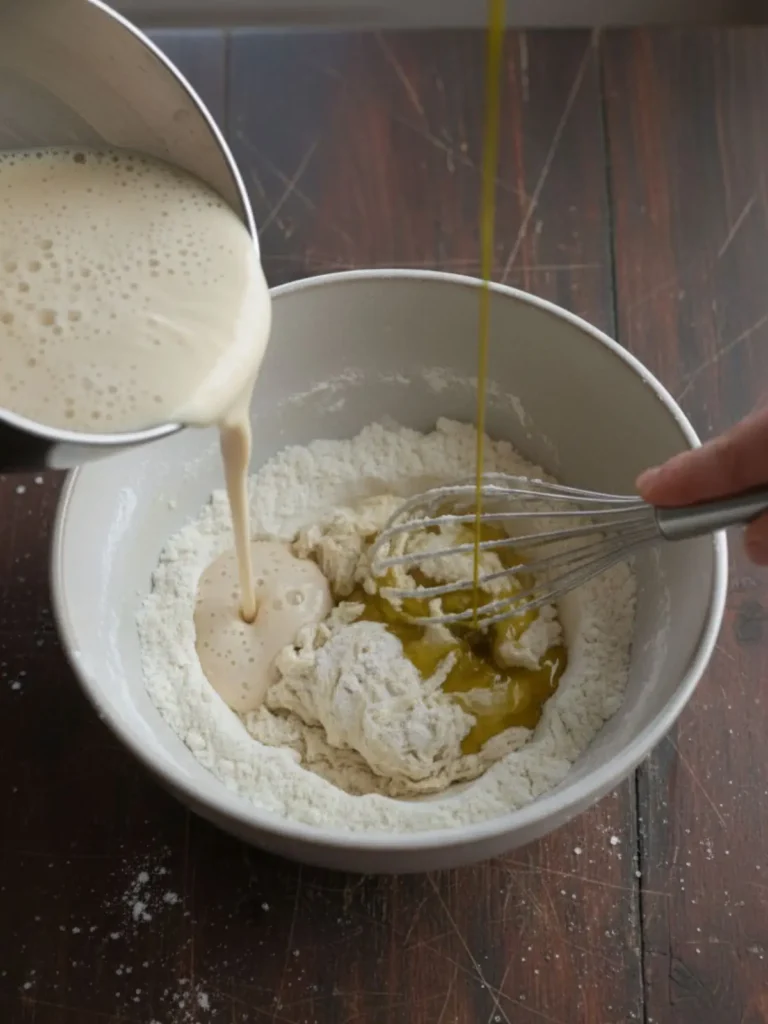
Add the flour, salt, and olive oil to the yeast mixture, then stir until a shaggy dough forms and there are no dry pockets hiding at the bottom of the bowl. At this stage, the dough will look rough and somewhat uneven, which is completely normal in a homemade pizza dough recipe. You are simply bringing the ingredients together so the flour can start absorbing the water and building structure. If you are adding garlic powder or Italian seasoning, mix them in now so they distribute evenly through the dough. The visual cue here is a messy but cohesive mass that holds together when pressed, even though it is far from smooth.
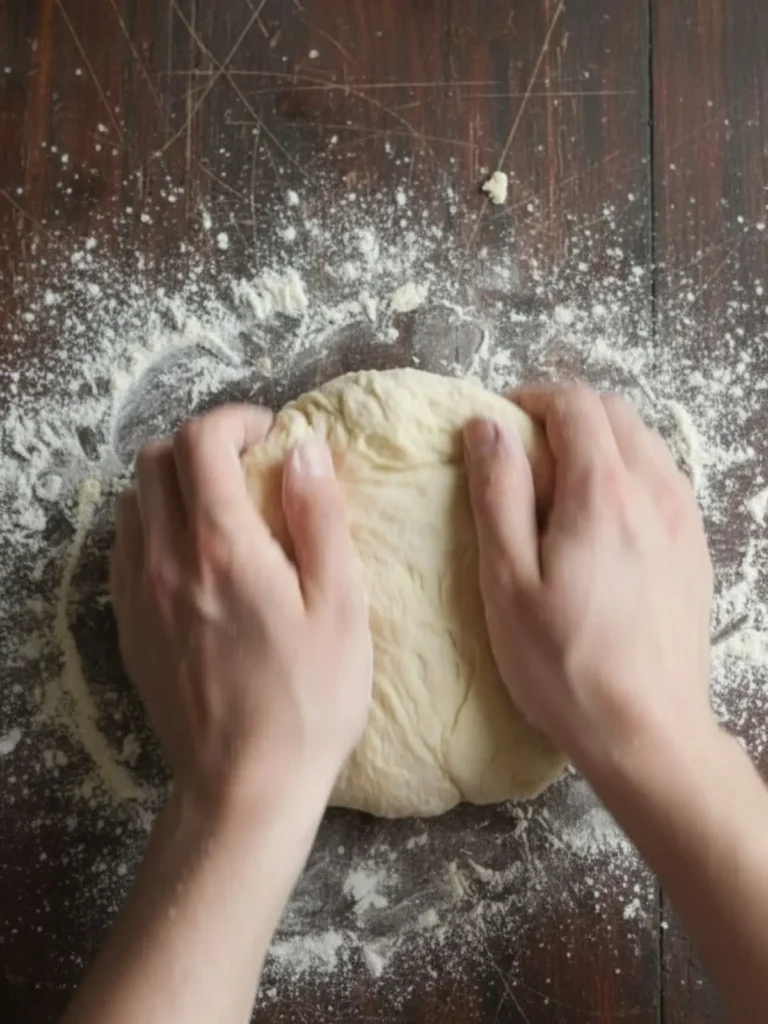
Turn the dough onto a lightly floured counter and knead until it becomes soft, stretchy, and smooth, which usually takes about 8 minutes by hand. Kneading matters because it strengthens the gluten network that helps the dough trap gas and bake into a chewy, structured crust. Try not to bury the dough in flour while kneading, since too much extra flour can make the finished crust dry and dense. Push the dough away with the heel of your hand, fold it back over itself, and rotate as you go until it feels more elastic than sticky. The visual cue is a dough ball that springs back slowly when poked and looks satiny instead of ragged.
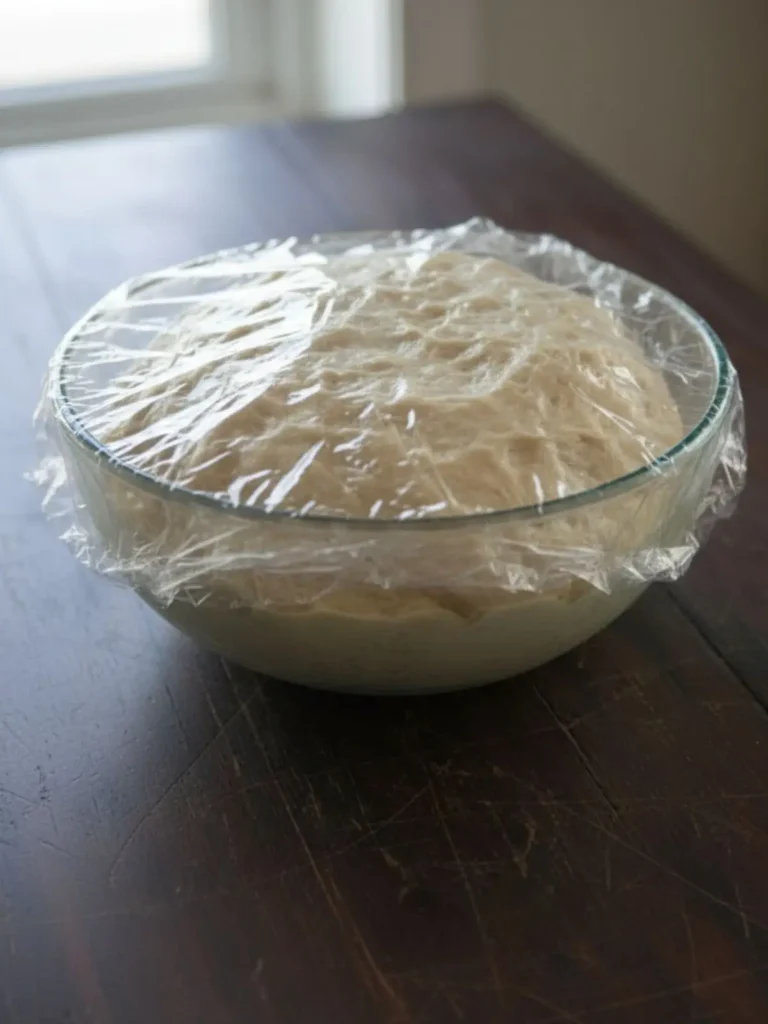
Lightly oil a clean bowl, place the dough inside, and turn it once so the surface is coated and protected from drying out while it rises. Cover the bowl tightly and let the dough rise in a warm spot until doubled, which usually takes about 60 to 90 minutes depending on your kitchen. This rest is where the yeast creates air pockets and flavor, so do not rush it just because the dough looked smooth after kneading. If your kitchen runs cool, placing the bowl in a turned-off oven with the light on can create a gentle proofing environment. The visual cue is a dough ball that looks puffed, expanded, and full of tiny bubbles beneath the surface.
Gently punch down the risen dough, then divide it into 2 equal pieces and shape each piece into a loose ball. This short degassing step releases large air pockets and makes the dough easier to shape without tearing. Let the dough balls rest for about 10 minutes before stretching, because that pause allows the gluten to relax and makes the dough much less likely to snap back. If you skip the rest, the dough may feel stubborn and tight even if it rose beautifully. The visual cue is dough that feels soft and airy, yet cooperative under your hands instead of tense.
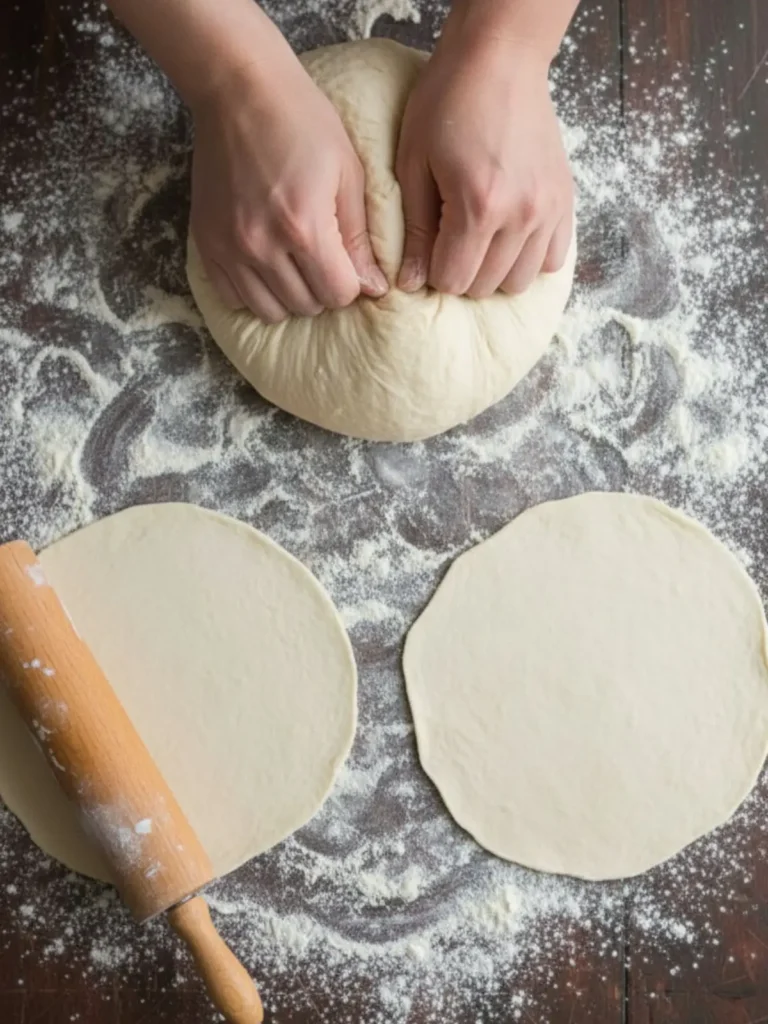
Stretch or roll one dough ball into a round about 12 inches wide, then transfer it to a cornmeal-dusted pizza pan, sheet pan, or peel. Work from the center outward and leave a slightly thicker rim if you want a more pronounced crust edge. This shaping method protects the gases near the border so the pizza bakes with that lovely puff around the outside. If the dough keeps shrinking back, stop and let it rest for a few minutes before continuing, because relaxed dough always stretches better.
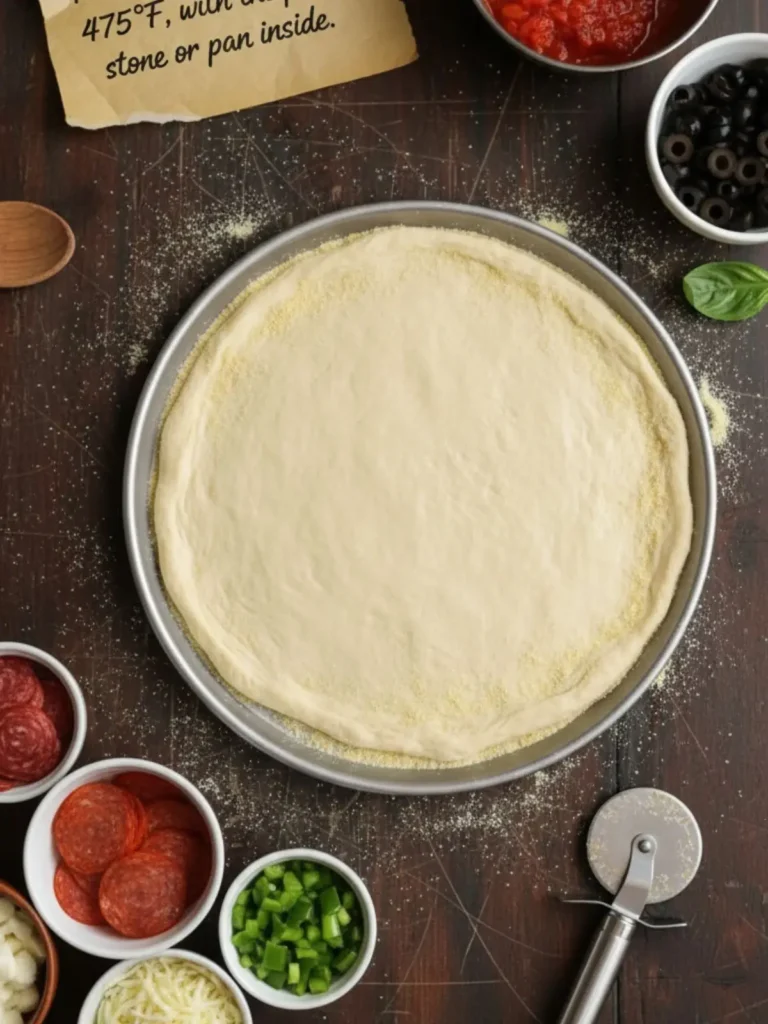
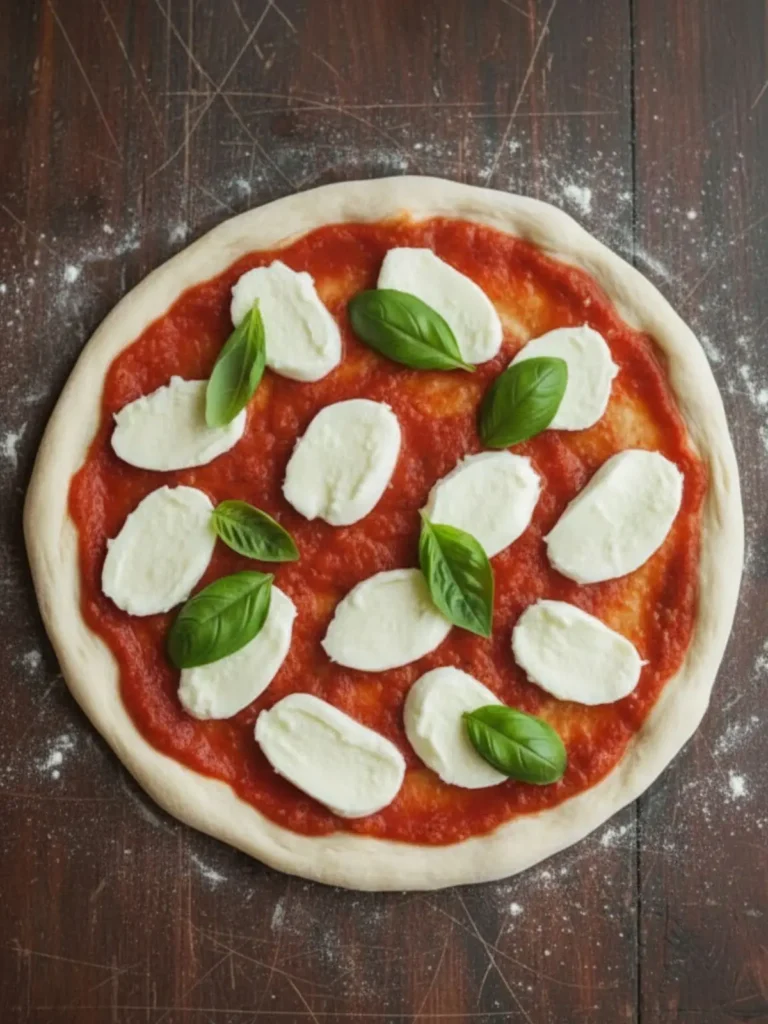
Brush the dough lightly with olive oil, add your sauce, cheese, and toppings, and keep the center reasonably light if you want the cleanest bake. The olive oil creates a subtle barrier that helps prevent a soggy crust, especially when using a wetter sauce or fresh vegetables. Be mindful not to overload the pizza, because too many toppings can weigh down even a strong pizza dough recipe and keep the center from cooking through. Fresh mozzarella, pepperoni, mushrooms, onions, basil, and a simple tomato sauce all work beautifully here. The visual cue is a pizza that looks generously topped but still balanced, with no heavy pileup in the center.
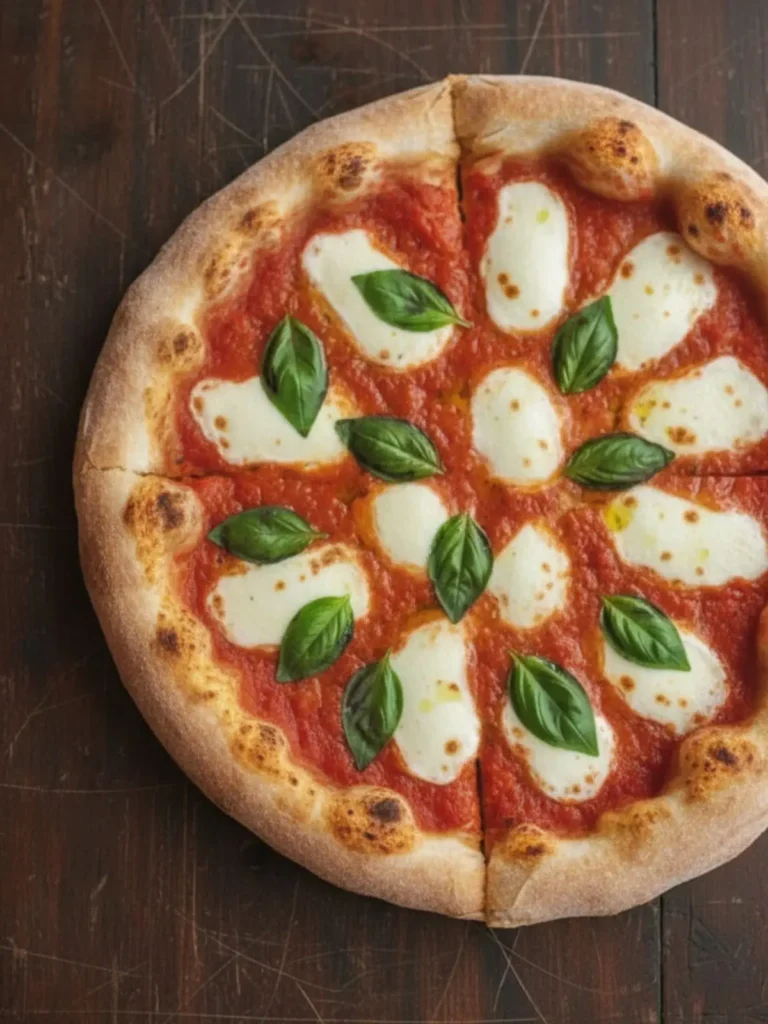
Bake the pizza in a very hot oven, ideally at 475 degrees Fahrenheit, until the crust is deeply golden and the cheese is melted and bubbling, usually about 12 to 15 minutes. The high heat gives the dough the burst of oven spring it needs while also creating color and crispness on the underside. Rotate the pan once if your oven browns unevenly, especially if one side tends to run hotter than the other. When the pizza comes out, let it rest for a minute or two before slicing so the cheese settles slightly and the crust finishes setting.
Baking Tools & Equipment
- large mixing bowl
- measuring cups and measuring spoons
- dough scraper or sturdy spatula
- pizza pan, baking sheet, or pizza stone
- pastry brush for olive oil
- oven mitts and a cooling rack
- pizza cutter or sharp chef’s knife
“Each baking tool listed above was carefully selected for consistent results. Click any product name to explore trusted kitchen essentials.”
How To Know When Baking Is Done
The best way to tell when this homemade pizza dough recipe is fully baked is to look for color, structure, and a little bit of lift. The outer crust should be golden brown with some darker toasted spots rather than pale beige. The cheese should be fully melted and bubbling, and any exposed sauce should look slightly thickened rather than watery. If you lift the edge of the pizza carefully with a spatula, the bottom should look browned and feel firm enough to support the slice. A properly baked pizza will also sound faintly crisp when the cutter passes through the crust.
Texture matters just as much as color when checking a pizza crust recipe. If the center droops heavily or feels wet when you lift a slice, the pizza likely needs another minute or two in the oven. On the other hand, if the crust edge feels very hard and the cheese is taking on too much color, you may have gone a little too far. Every oven behaves differently, so let visual cues guide you more than the clock once you have baked this recipe a couple of times. After one or two rounds, you will quickly learn the exact look of your ideal homemade pizza crust.
Common Mistakes To Avoid
- Using water that is too hot, which can weaken or kill the yeast before the dough even begins to rise.
- Adding too much flour during kneading, which can make the dough stiff and lead to a dry, dense crust.
- Not kneading long enough, so the dough never develops the elasticity needed for a good stretch and chew.
- Shaping the dough immediately after dividing it without giving it a short rest, which often causes shrink-back.
- Overloading the pizza with sauce and toppings, which can leave the center underbaked and soggy.
- Baking at too low a temperature, which prevents the crust from puffing and browning properly.
- Skipping the oil on the bowl or the cover during the rise, which can cause the dough surface to dry out.
Storage & Freezing Guide
- Store prepared dough in a lightly oiled container in the refrigerator for up to 3 days, then bring it to room temperature before shaping.
- After the first rise, divide the dough into portions and freeze each one tightly wrapped for up to 3 months.
- Thaw frozen dough overnight in the refrigerator, then let it sit at room temperature until soft and workable.
- Store leftover baked pizza in the refrigerator and reheat it on a sheet pan or skillet so the crust stays crisp.
- If you want a faster weeknight dinner, par-bake the shaped crust for a few minutes, cool it completely, and freeze it for later topping.
Flavor Variations
- Turn this homemade pizza dough recipe into garlic knots by cutting the dough into strips, knotting them, and brushing them with garlic butter after baking.
- Make a white pizza with olive oil, mozzarella, ricotta, spinach, and a little parmesan for a rich but fresh variation.
- Use barbecue sauce, cooked chicken, red onion, and cilantro for a sweet-smoky pizza night favorite.
- Add thin apple slices, gorgonzola, mozzarella, and rosemary for a sweet-savory combination that feels bakery special.
- Create a margherita style pizza with tomato sauce, fresh mozzarella, parmesan, and basil for a simple topping that lets the crust shine.
- Roll cheese into the border for a stuffed-crust version if you want something especially fun for family pizza night.
Frequently Asked Questions
1. Can I make this homemade pizza dough recipe ahead of time?
Yes, and it actually becomes even more flavorful when you give it extra time. After kneading, you can refrigerate the dough for a slow rise and use it the next day when you are ready to bake. Cold fermentation deepens the wheat flavor and often improves the texture, which is one reason many bakers love prepping dough in advance. Just make sure to bring it back toward room temperature before shaping so it stretches more easily. If the dough feels tight straight from the refrigerator, let it sit longer and it will relax beautifully.
2. What is the best flour for a pizza dough recipe for beginners?
Unbleached all-purpose flour is the best starting point for most home bakers because it is easy to find and gives very consistent results. It creates a crust that is chewy enough to feel satisfying without becoming overly tough. Bread flour is also a great choice if you want a bit more chew, but it is not required to make an excellent homemade pizza dough recipe. I would not recommend jumping straight into very high-hydration or specialty flour blends if you are brand new to dough.
3. Why is my homemade pizza crust tough instead of soft and chewy?
A tough crust usually comes from one of a few common issues rather than a single disaster. The dough may have had too much extra flour added during kneading, or it may have been baked too long in an oven that runs hot. Sometimes the crust also turns tough when the dough did not rise long enough, because under-proofed dough tends to bake up tighter and denser. Another possibility is that the dough was rolled too aggressively and lost too much of its internal air.
4. Can I freeze this easy pizza dough recipe?
Absolutely, and this freeze pizza dough method is one of the smartest ways to make homemade pizza feel convenient on a busy weeknight. Once the dough has completed its first rise, divide it into portions, wrap each one tightly, and store them in the freezer. When you are ready to bake, thaw the dough in the refrigerator overnight and then let it warm up on the counter until it feels pliable. The dough may look a little less puffy than fresh dough at first, but it will wake up as it loses the chill.
5. Do I need a pizza stone to make the best pizza dough recipe at home?
No, a pizza stone is helpful but absolutely not required for this best pizza dough recipe. A standard pizza pan or even a heavy sheet pan can produce a very good crust, especially when the oven is properly preheated. A stone stores more heat and can improve browning underneath, but skill with the dough matters more than equipment for beginners. If you already own a stone, use it and enjoy the extra crispness it can bring. If you do not own one, do not let that stop you from making a beautiful homemade pizza dough recipe tonight.
Expert Baker Tips
- Let the dough rest whenever it starts resisting your hands, because relaxed gluten always stretches better than tight gluten.
- Keep your toppings balanced and avoid excess moisture if you want the center of the pizza to bake fully and stay crisp.
- Preheat the pan or stone well so the crust gets strong bottom heat from the moment it hits the oven.
- Brush the outer rim with olive oil for deeper color and a more appetizing finish.
- Use semolina or cornmeal under the dough if you want easier transfer and a lightly textured bottom crust.
- Rotate the pizza partway through baking if your oven browns unevenly from side to side.
- Cool the pizza briefly before slicing so the cheese settles and the crust finishes setting.
Related Recipes From Our Kitchen
- Banana Bread Recipe: A soft, rich quick bread with deep banana flavor and the kind of tender crumb that makes it perfect for breakfast or snacking.
- Sourdough Bread Recipe: A naturally leavened loaf with a beautifully chewy crust, complex flavor, and the kind of baking project that rewards patience.
Final Baking Notes
The beauty of this homemade pizza dough recipe is that it teaches you how good simple baking can be when the method is solid. You are not chasing perfection here so much as learning the feel of a dough that wants to work with you. By the time you mix, knead, rise, stretch, and bake it once, you will already understand more about yeast dough than you did when you started. That confidence is part of what makes homemade pizza so satisfying, because the process becomes as rewarding as the meal itself. The finished crust delivers real flavor, real texture, and the kind of fresh-from-the-oven comfort that no delivery box can match.
Keep this pizza dough recipe for beginners close, because it is the kind of kitchen staple that quickly turns into a habit. Some nights you will top it simply with sauce and cheese, and other nights you will turn it into knots, rolls, white pizza, or a loaded family-style pie. The more often you make it, the more naturally you will read the dough and tweak it to suit your own oven, your favorite toppings, and your preferred crust thickness. That is when a recipe truly becomes yours, and this one is a wonderful place to begin. When you want a dependable, flavorful, and deeply comforting homemade pizza dough recipe, this is the dough to trust.
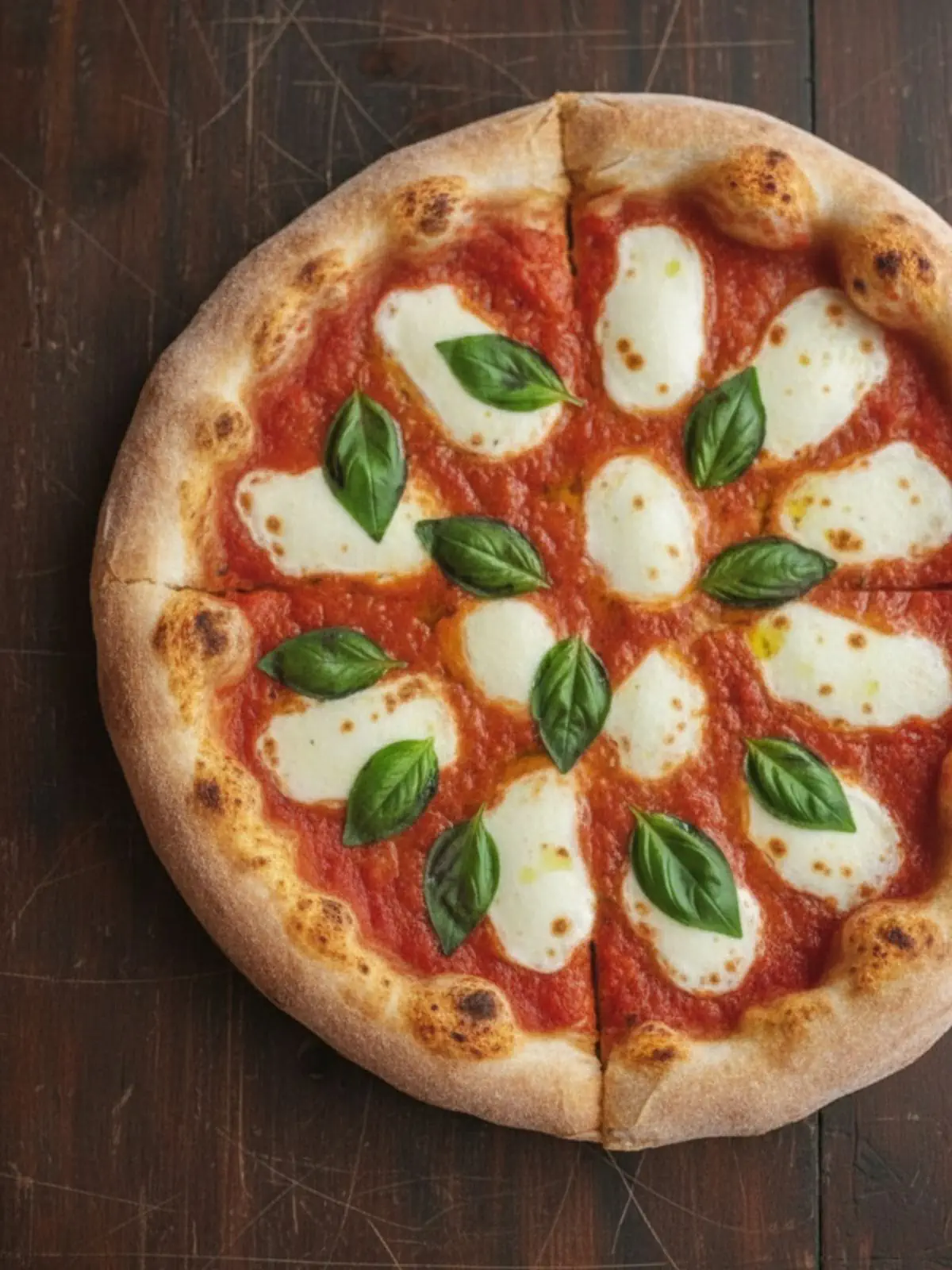
Homemade Pizza Dough Recipe
Ingredients
Equipment
Method
- In a small bowl, combine the warm water, sugar, and yeast. Stir gently and let it sit for 5-10 minutes until it becomes foamy.
- In a large mixing bowl, whisk together the flour and salt. Pour in the foamy yeast mixture and olive oil, stirring until a dough forms.
- Knead the dough by hand or with a stand mixer for about 5-8 minutes, until smooth and elastic.
- Place the dough in a greased bowl, cover it with a kitchen towel or plastic wrap, and let it rise for about 90 minutes or overnight in the fridge.
- Once the dough has doubled in size, punch it down and divide it into 2 portions. Roll each portion into a 12-inch circle.
- Preheat the oven to 475°F (245°C) and place a pizza stone or pan inside to heat.
- Transfer the shaped dough onto a greased pizza pan, sprinkle with cornmeal, and top with your desired sauce, cheese, and toppings.
- Bake the pizza for 12-15 minutes, or until the crust is golden brown and the cheese is bubbly.
Notes
- Always use warm water (not hot) to activate the yeast.
- If you prefer a thinner crust, stretch the dough out more when shaping.
- For a chewier texture, substitute bread flour for all-purpose flour.
- Make sure the dough is allowed to rise fully; rushing this step will affect the texture.
- Olive oil helps create a crisp crust and adds flavor.
- You can refrigerate the dough overnight for better flavor development.
- Brush the dough with a little olive oil before adding toppings to prevent sogginess.
- For a crispy crust, use a pizza stone. If you don’t have one, a regular sheet pan will work.
- Leftover pizza dough can be stored in the fridge for up to 2 days or frozen for up to 3 months.
- Let your pizza cool for about 5 minutes before cutting to prevent the cheese from sliding off.